

EMPLOYMENT LAW, MADE PRACTICAL
Probation periods are no longer a rubber stamp
From January 2027 the qualifying period for unfair dismissal drops to six months. That changes what probation is for, and why a quiet form at the end of it is now a risk rather than a formality.
In a lot of small organisations, probation has become a formality. The new starter joins, the contract mentions a three or six month probation, and at the end someone signs a form to confirm them in post. Often nobody looks at it again between the first day and that final signature.
That approach has survived for one reason. Until now, the law gave employers a long buffer before a new employee could challenge a dismissal. From January 2027 that buffer largely disappears, and probation stops being a piece of paperwork and becomes one of the more important things a manager does in someone’s first few months.
What is actually changing?
At the moment, most employees need two years’ continuous service before they can bring an ordinary unfair dismissal claim. The Employment Rights Act 2025 reduces that qualifying period to six months, for dismissals on or after 1 January 2027. The date is set in the legislation itself, so it is not something likely to slip quietly. In practice, anyone you take on from around the middle of 2026 will have reached six months’ service by the time the change lands, and will gain unfair dismissal protection from that point.
Two related changes raise the stakes further. The cap on unfair dismissal compensation is being removed from the same date, so awards will reflect a person’s actual financial loss rather than a fixed ceiling. And the time someone has to bring a claim is doubling, from three months to six. None of this affects claims that never needed a qualifying period in the first place, such as discrimination or whistleblowing, which remain day-one matters exactly as they are now.
Why a rubber stamp is now a risk
With a two-year buffer, an early dismissal carried relatively little legal risk, as long as the reason was not discriminatory. From January 2027 that comfort is gone much sooner. If a new starter is not right for the role, you will usually need to have worked that out, and acted on it, before they reach six months.
The danger is drift. If the probation date slides past because nobody was really watching it, you can find the person has gained full unfair dismissal protection before you have made any decision. At that point, parting ways is no longer a simple probation matter. It becomes a capability or conduct process that has to follow a fair procedure, now carrying the higher financial exposure that sits behind these changes.
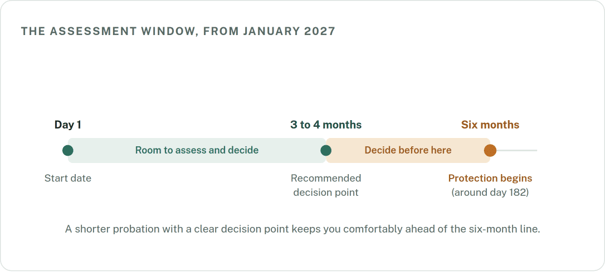
From 1 January 2027, an employee with six months’ service can bring an ordinary unfair dismissal claim. The task is to assess and decide well before that point.
What good probation looks like now
The instinct might be to make probation longer. It is usually the opposite. A shorter, sharper probation of around three to four months, with a clear contractual right to extend where you genuinely need more time, gives you a real decision point comfortably before the six-month threshold.
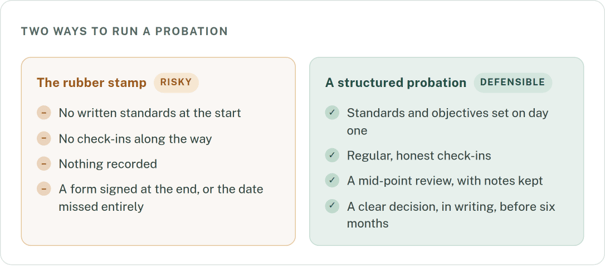
Length matters far less than substance, though. A probation that protects you and is fair to the employee tends to share the same handful of features.
- Clear standards from day one. The person knows what good looks like in their role, in writing, from the start, not by guesswork.
- Structured check-ins, not one meeting at the end. Short, regular conversations where you say honestly how things are going.
- A proper mid-point review, so nobody is taken by surprise when the decision comes.
- Honest, specific feedback, with support or training where the issue is one that can be fixed.
- Brief, factual notes of what was discussed and agreed at each point.
- A decision taken in good time and confirmed in writing, well before the six-month line.
When someone is not meeting the standard
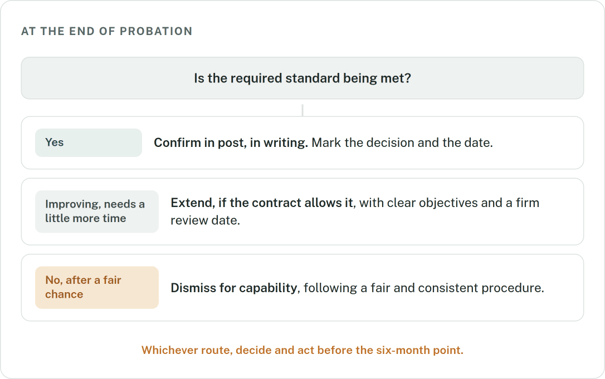
If the required standard is not being met, you have options, and the right one depends on the situation. Where there is genuine improvement and your contract allows it, a short and clearly defined extension can be fair to everyone. Where the issue looks fixable, a focused support plan may resolve it. Where it is clear the role is not working, you can still bring the employment to an end, but even during probation a fair and consistent process protects you, and it matters more the closer the person is to the six-month point. The ACAS Code of Practice on disciplinary and grievance procedures is a sensible reference throughout.
What to do now
You do not need to wait for January 2027 to get ready, and a few small changes go a long way.
- Review your probation clauses. Are they the right length, and do they give you a clear, workable right to extend?
- Set written standards for every new starter at the outset, rather than vaguely or only out loud.
- Build simple review points into the first few months, with a diary reminder for the decision date so it never drifts.
- Brief your managers. Most early-employment risk comes down to managers who were never shown how to set expectations, give feedback and record it.
- Keep records light but consistent. A short, factual note after each conversation is enough.
None of this needs to be heavy or bureaucratic, and for a small team it should not be. The aim is simply to make a considered decision about each new starter, on time, and to be able to show how you reached it.
Need a hand before the change lands?
We help small businesses and charities across the UK review their probation clauses, set up a straightforward review process and train managers to handle the early months well. Practical, proportionate, and built around how your team actually works.